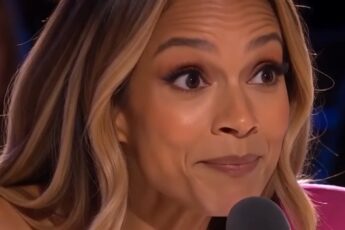
From a ‘world record’ undone on a technicality to a VIP meltdown engineered by an earpiece—and a child comic who isn’t what he seems—this hour of Got Talent pranks turns the judges’ table upside down.
On Got Talent, the judges are meant to be in control. They call the shots, hit the buttons, and steer the room. But what happens when the script flips—when the panel becomes the punchline, and the room turns on a dime? A riotous collection of pranks and left-field stunts puts the power right back into the hands of performers and producers who understand one thing better than anyone: nothing delights an audience like watching the mighty sweat.
- A baker, a family legacy—and 44 pies for nothing
- The VIP experience that no one asked for
- When the walkie-talkie can deliver anything
- Disco dogs and four perfect ‘woofs’
- A 10-year-old with jokes—and a secret
- Promo chaos with David Alan Greer
- What pranks reveal about power—and why they land
- The pleasure of the unexpected—again and again
A baker, a family legacy—and 44 pies for nothing
It starts small, sweet even. “What’s your name?” a judge asks. “Dave Bibby,” comes the reply. “I work in a bakery. I’m a baker.” The pitch is disarmingly gentle: a family record to reclaim, a dad to make proud. Dave is shooting for “the most custard pies thrown at the face in one minute.” An official in a tie appears, introducing himself as “the official adjudicator for the British Custard Pie Association.” He lays down the law with deadpan precision: “The current record is 36 pies in one minute.” The tape is measured. The chalk line is stressed. The countdown begins.
For sixty seconds, it’s glorious bedlam—whipped cream flying, audience howling, judges bracing for splats. When the whistle stops, the adjudicator returns with a drumroll-worthy reveal: “In the one minute period, the amount of custard pie thrown was… 44.” The room erupts. Then, without changing tone, he adds the ice bath: “Which means the record attempt is null and void.” Why? Because one of the throwers “stepped over the… line.” The look on faces swings from glee to outrage to disbelief. “This wasn’t a real record,” a judge finally mutters. The baker laughs, finally letting the room in. The gag lands where the pies did: right in the face of anyone who thought television can’t keep a straight face while telling a perfect lie.
The VIP experience that no one asked for
Backstage, another trap is set. “Is this a VIP area?” someone wonders. It is—and it is not. Howie Mandel, masked and mic’d, is about to be remote-controlled. An earpiece hums with Simon Cowell’s voice, and the rules are simple: anything Simon says, Howie must do. “It is our pleasure to have you here,” Howie tells a group of unsuspecting guests, pitching his voice too high, then too low, until Simon settles on something perfectly wrong. Security theater begins. “We’re gonna have to do some security checks,” Howie says. “Can we just see the soles of your shoes, please?” He asks for “proof” that they’re important: “We can’t just have general Joe public. You have to just be important.”
From there, the tone tilts toward the absurd. He barks orders—“Stand up. Sit down. Everybody down”—and herds two men into corners. It gets edgier: “Face the wall. Everybody, face the wall. Don’t turn around.” The guests simmer. A statue gets nudged and topples with a sickening crack. “We’re so sorry about that,” Howie winces, glancing at security. A manager storms in. “What is going on?” Howie gets mock-fired on the spot: “By the way, excuse me. You’re fired. Get out of here.” Then the mask comes off. Gasps give way to laughter. “This is Howie Mandel.” Relief ripples through the room, and the prank finds its point: power only matters if you know how to use it; when abused, even for laughs, it feels dangerous. It’s a fine line—and TV walks it with outsize shoes.
When the walkie-talkie can deliver anything
Sometimes the smallest props birth the biggest bits. Someone “just found” a walkie-talkie that connects straight to the judges’ desk. “We ask for anything that gets delivered,” the voice explains. “Anything.” A voice clicks in: “Hi. Could we get some bananas to Amanda, please?” Minutes later, a stagehand arrives with a full bunch. “Am I not these for a reason?” Amanda wonders, staring at the fruit like it might hatch.
The mischief doubles: “Could we get a stapler to Alicia, please?” Alesha (mischief-makers mispronounce her name as “Alicia”) is now armed with office supplies and no mission. The air between the panelists fills with suspicion. Inside the absurdity is a familiar television joy: the way a toy-grade request can upstage the actual show and, for a breath, make everyone complicit in the same question—what on earth is happening?
Disco dogs and four perfect ‘woofs’
Then, just when prank fatigue threatens, something pure saunters out in sequins. “You’re disco dogs,” the judges coo. “The stage is yours, disco dogs.” The music pops; the crowd beams. The critique writes itself. “It was completely bonkers and completely Britain’s Got Talent,” one judge cheers. Another adds, with a grin you can hear, “I loved it, and I’m going to kick it off with a big fat… wolf.” The panel joins in: “It’s a wolf from me.” “We got four woofs.” In a night of bait-and-switches, this is the simplest punchline: joy for joy’s sake.
A 10-year-old with jokes—and a secret
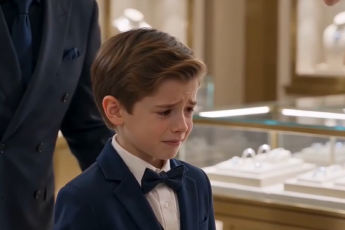
“My name is Remy Smith,” says a kid in sneakers, trying to look older than ten and not quite managing it. “I’m gonna tell you some jokes.” He leads with Canadian kid banter: shoveling snow, skating, apologizing—“sometimes all at once.” A judge interrupts. “Did your mom or dad write these jokes?” Remy shakes his head. “You sound like you’re telling somebody else’s jokes,” the judge presses. The room tightens. Another adult asks a comedian on the panel to weigh in. “Be honest,” the pressure goes. The boy’s small smile flickers.
Then comes the key exchange. “There is one rule when it comes to comedy,” a judge intones. “What is the rule?” The answer is nonsense—and the password: “April scissors.” A beat later, the veil lifts. “Remy is an actor,” someone reveals. “We worked this out. Right, Remy?” The boy nods, grinning wide now that the game is up. The judge who pushed hardest flips, emotional and relieved. “He is worth a million dollars. You’re the best, buddy.” What could have felt like adults steamrolling a child instead becomes a lesson in craft: the show understands the tension it creates and releases it with care, letting the kid own the last laugh.
Promo chaos with David Alan Greer
Elsewhere, a familiar face walks in with a director’s cap and a delicious agenda. “My name’s David. David Alan Greer,” he announces. “Howie called me up and planned this whole thing. So he’s the one to blame.” The job is straightforward—regional promos—but everything around it is designed to unravel. The cities swap behind the judges in rapid sequence: Detroit, Philadelphia, San Antonio, Hawaii, Albuquerque, New York, Alaska. The instructions get stranger. “Wait till I say action, Heidi,” Greer says, as she plows ahead. She apologizes, then does it again. Props cascade onto the set. Sunglasses. A rubber fish. A floating iceberg graphic that drifts into shot at exactly the wrong time.
Simon tries to keep a straight face for Alaska. “The catch of the day is talent served up,” he reads grandly while someone deadpans, “Leave the fish.” A phantom car zips behind them on a screen. “Can you just demonstrate for them, please?” a voice asks. It doesn’t help. “We’re not doing the car,” someone snaps, now half-laughing, half-surrendering to the bit. Greer calls for “action,” and no one knows whether to talk or chase the prop drifting past. By the time someone groans “Delete this thing,” the set is a playground of missed cues and intentional misfires—television’s version of throwing cream pies, minus the cleanup.
What pranks reveal about power—and why they land
In each setup, the prankster’s target is not cruelty; it’s certainty. The baker’s “record” undercuts blind faith in rules. The VIP fiasco explores how quickly authority can be faked, and how fast people will yield to a clipboard and a tone. The walkie-talkie gag shows the panel’s appetite for control—and how easily it can be hijacked by a cheap radio. The Remy reveal flips the fear of hurting a child into the comfort of a well-planned twist, reminding viewers that surprise feels safest when everyone’s in on the secret at the end. And the promo shoot, helmed by a comedian with a director’s swagger, needles the judges’ media polish until it frays into laughter.
It also matters who gets pranked and how. When Howie tells paying guests to “face the wall,” the bit only works because it ends in apology and release, with Howie unmasked and contrite. When a kid’s set is picked apart, it only sings because he’s a performer playing a part, not a punchline. These segments understand that the best jokes land on the powerful and leave everyone else smiling on the walk home.
The pleasure of the unexpected—again and again
The magic of this hour isn’t just in the big swings. It’s in the quiet asides: a judge peeking under a desk for hidden speakers; bananas parked like trophies beside a buzzer; the way a single word—“Action”—can throw a whole panel onto their heels. It’s in Simon’s dry grin after a statue crashes, or Amanda’s baffled look when a runner dutifully delivers produce to a prime-time desk. It’s in the way a room leans forward as one when a boy says, “I’m 10,” and then leans back in laughter when he reveals he’s been acting all along.
There’s more, too, threaded through the episode like fuses waiting to pop: slippery stages that turn slapstick at the worst moment, illusions that wobble until everyone—especially the judges—wonders if they’re safe, even an argument from the front row about what should or should not be allowed in a pasta bowl. The connective tissue is simple and effective: take the people who usually set the tone, put a wobble in their step, and watch as they find their footing in public. It humanizes them. It reminds us why we watch live entertainment at all. Anything can happen, and sometimes the best moments are the ones no one planned to like.
By the finale’s gentle exhale—dogs earning “four woofs,” a prankster thanked for the scare instead of scolded for it—the hour has made a quiet case for mischief as an art. Done well, it doesn’t humiliate. It warms. It breaks the fourth wall without breaking the trust. It proves that the judges we love to love (and love to tease) can take a joke and pass it on.
If you want the full rollercoaster—the pies, the fake rules, the walkie-talkie mayhem, the unmasking, the promos that won’t sit still, and that perfect child-actor twist—watch the video in full. It is a love letter to the unexpected, and a reminder that on Got Talent, the best seat in the house is anywhere you’re ready to be surprised.